
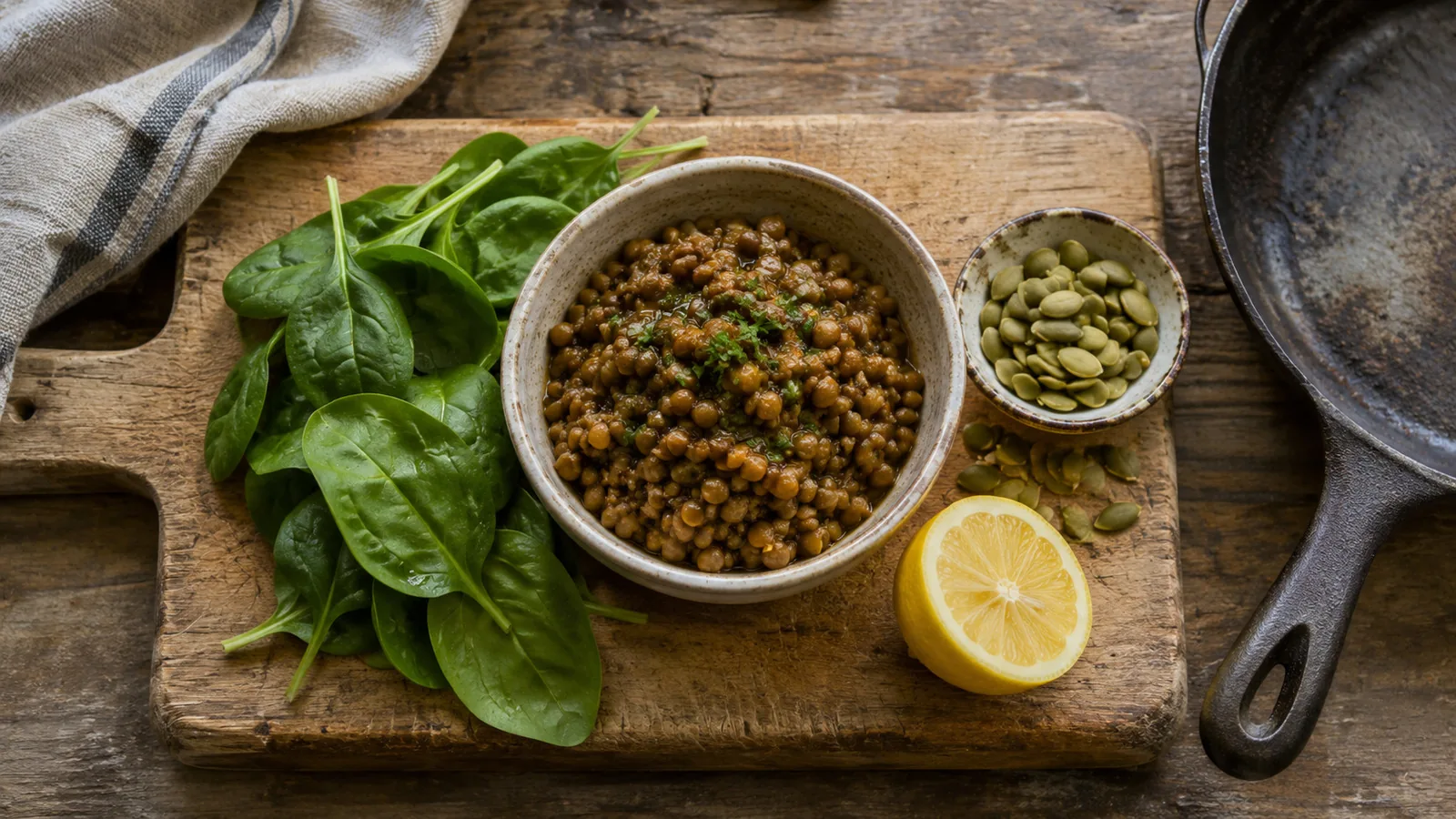
Two kinds of iron
Food contains two forms of iron. Heme iron is found in meat, poultry and seafood. Nonheme iron is found in plants and in fortified foods, and also makes up part of the iron in meat.
The difference matters because the body handles them differently. Heme iron is absorbed more easily, and what you eat alongside it makes little difference. Nonheme iron is absorbed less well, and other foods in the same meal can raise or lower how much of it you take in.
That is why the same amount of iron on a plate can do very different things depending on what else is there.
How much iron adults need
Daily needs depend mostly on sex, age and life stage. The US recommended amounts for adults are:
- Men 19 and over: 8 mg a day
- Women 19 to 50: 18 mg a day
- Women 51 and over: 8 mg a day
- During pregnancy: 27 mg a day
- While breastfeeding: 9 mg a day
Vegetarians are advised to aim for about 1.8 times these amounts, because the iron in a plant-based diet is absorbed less efficiently.
The upper limit for adults, from all sources combined, is 45 mg a day. Iron is one of the nutrients where more is not better. The body has no easy way to get rid of extra iron, and too much can be harmful.
The foods with the most iron
Here are some common foods and their approximate iron content per serving, from the US Office of Dietary Supplements:
- Fortified breakfast cereal, one serving with 100 percent of the daily value: 18 mg
- Oysters, 3 oz cooked: 8 mg
- White beans, canned, 1 cup: 8 mg
- Dark chocolate, 45 to 69 percent cacao, 3 oz: 7 mg
- Beef liver, 3 oz: 5 mg
- Lentils, boiled, half a cup: 3 mg
- Spinach, boiled, half a cup: 3 mg
- Firm tofu, half a cup: 3 mg
- Kidney beans or chickpeas, half a cup: 2 mg
- Beef, 3 oz braised: 2 mg
- Sardines, 3 oz canned: 2 mg
- Baked potato with skin, one medium: 2 mg
- Cashews, 1 oz: 2 mg
A few things stand out. Beans and lentils are among the most practical everyday sources, cheap and easy to add to meals you already make. Fortified cereals and breads contribute a lot of iron in many American diets without anyone noticing. Dark chocolate is on the list, though three ounces is a generous portion.
Spinach needs a footnote. It contains a fair amount of iron, but it also contains substances that make that iron harder to absorb, so it is less of an iron powerhouse than its reputation suggests.
What helps your body absorb more
For plant iron, the rest of the meal makes a difference. Vitamin C is the best known helper: eating foods rich in it in the same meal increases how much nonheme iron you absorb. Meat, poultry and seafood also improve absorption of the plant iron eaten with them.
Easy pairings:
- Lentil soup with a squeeze of lemon
- Bean chili with tomatoes and peppers
- Fortified cereal with strawberries or orange slices
- A spinach salad with red pepper and a little chicken
- Hummus with raw peppers or broccoli
None of this needs a special recipe. Many traditional dishes already pair beans or grains with tomatoes, peppers or citrus.
What gets in the way
Some foods and drinks reduce how much nonheme iron you absorb when taken in the same meal. A review in The American Journal of Clinical Nutrition lists the main ones: phytate, found in whole grains, beans and seeds; polyphenols, found in tea and coffee; and calcium.
The same review adds some perspective. These effects show up clearly in studies of single meals, but in studies of varied diets over many meals the effect of any single factor is more modest. Your overall diet and your body’s iron status matter more than one cup of tea.
Practical adjustments if you are working on your iron:
- Have tea or coffee between meals, an hour or so apart from your main iron-rich meal.
- If you take a calcium supplement, take it at a different time from your iron-rich meals.
- Soaking, sprouting and cooking beans and grains reduces their phytate content.
There is no need to cut whole grains or beans out of your diet. They are good sources of iron and of much else.
Who should pay closer attention
Some groups are more likely to run low on iron. The Office of Dietary Supplements lists pregnant women, infants and young children, frequent blood donors, and people with certain conditions, including cancer, heart failure and gastrointestinal disorders or surgery. Women of childbearing age need more iron than men, and vegetarians need more because of lower absorption.
If you feel tired all the time, look unusually pale, get out of breath easily or feel dizzy, talk to a doctor. Low iron is diagnosed with a simple blood test, and so are other causes of the same symptoms.
Do not start iron supplements on your own to fix tiredness. Too much iron can be harmful, some people have a genetic condition that makes them store too much, and supplements can cause stomach problems. If you need more iron than food can provide, your doctor will tell you how much and for how long.
A week of iron-friendly meals
You do not need a special diet to eat more iron. A few small swaps across the week cover a lot:
- Breakfast: fortified cereal or oatmeal with pumpkin seeds and berries.
- Lunch: a lentil or bean soup with lemon, or a chickpea salad with tomatoes and peppers.
- Dinner: a beef or chicken stir-fry with broccoli and peppers, or bean chili.
- Snacks: a handful of cashews, or dried apricots with an orange.
- Drinks: tea and coffee between meals rather than with them.
For more on building simple, repeatable meals, see our guide to healthy food for a busy week.
Frequently asked questions
What food has the most iron?
Per serving, fortified breakfast cereals and shellfish such as oysters are among the highest, followed by beans, beef liver and dark chocolate. For everyday eating, beans, lentils, lean meat and fortified grains are the most practical sources for most people.
How can I increase my iron absorption naturally?
Pair plant sources of iron with foods rich in vitamin C, such as citrus, peppers, tomatoes or strawberries, and if you eat meat, include a little meat, poultry or fish with plant foods. Having tea and coffee between meals instead of with them also helps.
Is spinach a good source of iron?
Spinach contains a fair amount of iron, but it also contains substances that reduce how much of it you absorb. It is still a healthy vegetable, but beans, lentils, lean meat and fortified grains are more reliable sources of iron.
Should I take an iron supplement if I feel tired?
Not without a blood test. Tiredness has many possible causes, and taking iron you do not need can be harmful. If you suspect low iron, ask your doctor to check, and follow their advice on whether a supplement is needed.
Sources
- National Institutes of Health, Office of Dietary Supplements. Iron: Fact Sheet for Health Professionals. https://ods.od.nih.gov/factsheets/Iron-HealthProfessional/
- Hurrell R, Egli I. Iron bioavailability and dietary reference values. The American Journal of Clinical Nutrition, 2010. https://pubmed.ncbi.nlm.nih.gov/20200263/
